
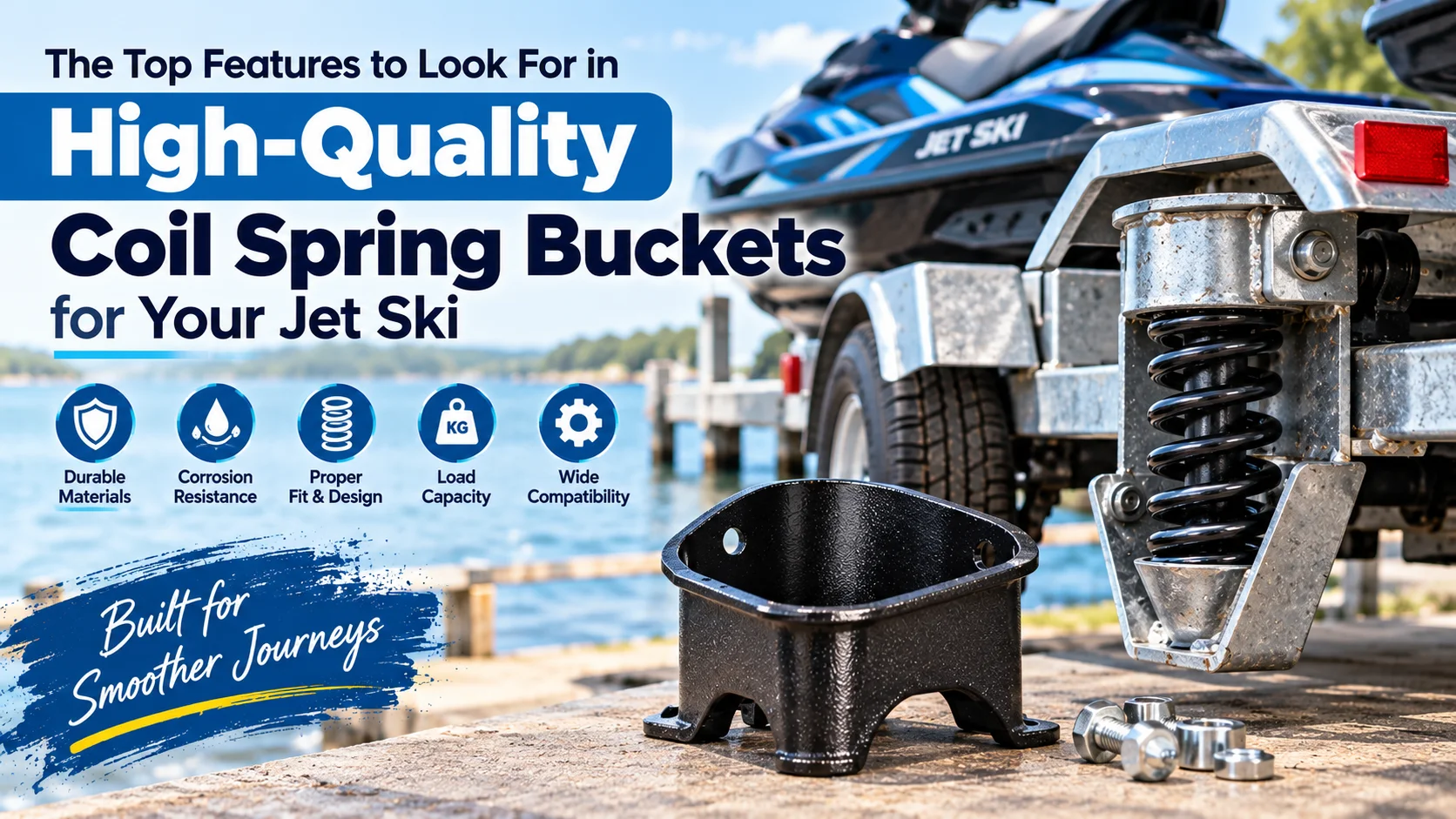
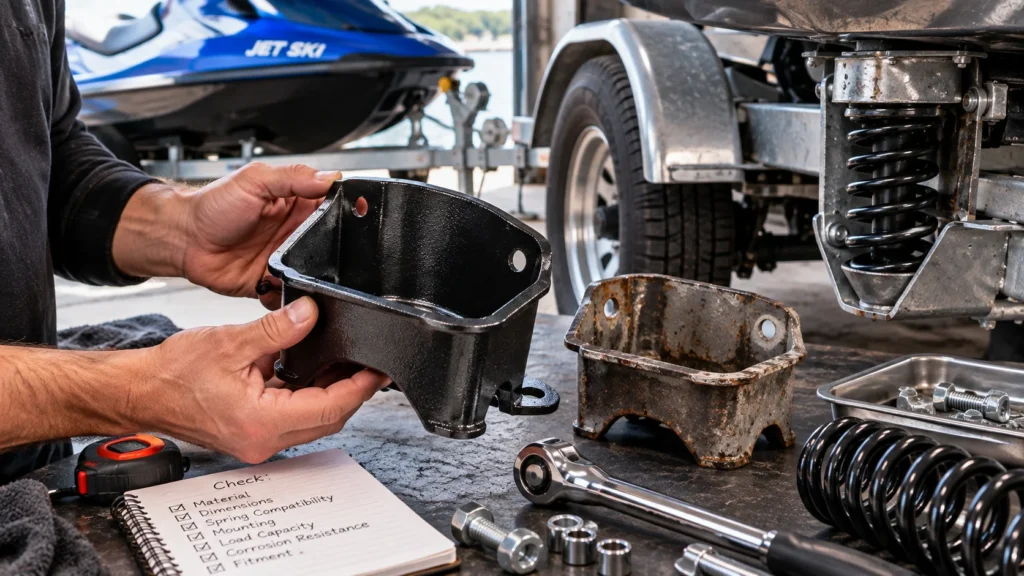
When maintaining a jet ski trailer, small suspension components can make a big difference to the trailer’s overall performance and reliability. A coil spring bucket is one of the components that helps locate and support the coil spring within a trailer suspension system. Choosing the right one requires more than simply looking for the cheapest replacement.
For jet ski trailers, suspension components are exposed to road vibration, moisture, dirt, and potentially corrosive saltwater. A high-quality coil spring bucket should therefore be durable, properly sized, compatible with the suspension system, and capable of handling the demands of the trailer.
What Is a Coil Spring Bucket?
A coil spring bucket is a suspension component designed to locate and support a coil spring within a suspension assembly. Its exact shape, mounting arrangement, and dimensions can vary depending on the trailer and suspension design.
On a jet ski trailer, the suspension system helps absorb road impacts and allows the trailer to move more predictably while transporting the watercraft. Because the spring bucket works as part of this system, its dimensions and construction need to match the application.
Why Does the Quality of a Coil Spring Bucket Matter?
A trailer suspension component has to withstand repeated movement and loading while being exposed to outdoor conditions. A poorly manufactured or incorrectly fitted spring bucket may not provide the support and alignment required by the suspension system.
For that reason, buyers should look beyond appearance and price. Construction quality, corrosion resistance, dimensions, spring compatibility, mounting configuration, and the requirements of the complete suspension system all deserve attention.
Top Features to Look for in a High-Quality Coil Spring Bucket
1. Durable Construction
Durability should be one of the first considerations when selecting a coil spring bucket. The component is subjected to repeated suspension movement and loads as the trailer travels over different road surfaces.
Look for a component manufactured from an appropriate material and thickness for the intended suspension application. Quality manufacturing can help the bucket withstand normal operating stresses without premature deformation or damage.
2. Corrosion Resistance
Corrosion resistance is particularly important for jet ski trailers because they are frequently used around water. Saltwater and road moisture can accelerate corrosion on exposed metal components, especially when the trailer is not rinsed and maintained properly after use.
When comparing spring buckets, pay attention to the material, protective coating, finish, and manufacturer’s recommendations for marine or outdoor environments. A corrosion-resistant finish can provide an additional layer of protection, but regular cleaning and inspection are still important.
3. Correct Dimensions
One of the most important features of a replacement coil spring bucket is its dimensions. A component that looks similar to the original may still be unsuitable if its measurements or mounting points differ.
Before purchasing, compare the replacement with the original component and check the manufacturer’s specifications. Depending on the design, relevant measurements may include spring diameter, mounting dimensions, overall height, width, and the position of mounting points.
4. Coil Spring Compatibility
The spring bucket must work correctly with the coil spring used by the trailer’s suspension system. The spring needs to sit securely and remain properly located throughout normal suspension movement.
Don’t assume that two coil springs with similar appearances are interchangeable. Check the spring dimensions and the suspension manufacturer’s specifications before selecting a replacement bucket.
5. Mounting Compatibility
Mounting compatibility is just as important as spring compatibility. Depending on the trailer design, the bucket may be welded, bolted, or incorporated into another part of the suspension structure.
Check how the original component is installed and whether the replacement is designed for the same mounting arrangement. If the component requires welding or structural modification, professional installation is generally preferable to an improvised repair.
6. Appropriate Load and Suspension Capacity
A coil spring bucket should be appropriate for the trailer’s suspension system and intended load. However, the bucket should not be considered in isolation when evaluating capacity.
The trailer’s axle rating, springs, suspension components, tires, wheels, frame, and overall gross vehicle weight rating all contribute to the trailer’s load capacity. Always use the manufacturer’s specifications when determining whether a particular suspension component is suitable.
7. Quality Welding and Manufacturing
If the spring bucket is welded into the suspension assembly, the quality of the manufacturing and welds deserves careful consideration. Poorly formed or damaged welds can compromise the structural integrity of the assembly.
Look for clean construction, consistent manufacturing, and a component produced for the intended application. If you notice cracking, severe corrosion, distortion, or other structural damage on an existing component, have the suspension inspected before continuing to use the trailer.
8. Proper Clearance
The spring bucket and surrounding suspension components need sufficient clearance to move through their normal operating range. Incorrect dimensions or installation can result in unwanted contact between suspension parts.
After installation, check that the spring is seated correctly and that the suspension can operate without interference. If you’re unsure about the correct installation position, consult the trailer manufacturer or a qualified technician.
How Saltwater Can Affect Jet Ski Trailer Suspension
Marine environments can be particularly demanding on trailer components. Saltwater residue can contribute to corrosion on metal parts, fasteners, suspension components, and other exposed areas.
After launching or retrieving a jet ski in saltwater, rinsing the trailer with fresh water can help remove salt and other contaminants. Pay particular attention to areas around the suspension, wheels, brakes, frame, and other components exposed to water.
Regular inspection is also important. Surface corrosion should not automatically be treated as a structural failure, but deep corrosion, cracks, deformation, or damaged mounting areas deserve professional attention.
How to Choose the Right Coil Spring Bucket
Choosing the right replacement begins with identifying the trailer and suspension system rather than simply searching for a generic spring bucket.
- Identify the trailer: Record the trailer manufacturer, model, year, and other available identification information.
- Inspect the existing component: Look for a part number, markings, dimensions, or other identifying information.
- Measure the component: Check relevant dimensions and compare them with replacement specifications.
- Check the spring: Confirm that the replacement bucket is designed for the correct coil spring.
- Check the mounting method: Make sure the replacement is designed for the same type of installation.
- Consider the environment: For jet ski trailers, pay particular attention to corrosion resistance and marine exposure.
- Confirm the suspension specifications: Make sure the complete suspension system remains appropriate for the trailer’s intended load.
Common Mistakes to Avoid
Buying a replacement suspension component without checking the complete application can lead to fitment problems. Some common mistakes include:
- Choosing a component based only on its appearance.
- Ignoring the trailer’s make and model.
- Failing to measure the original component.
- Ignoring coil spring dimensions.
- Assuming all trailer suspension components are interchangeable.
- Overlooking corrosion caused by repeated saltwater exposure.
- Installing a structural suspension component without confirming the correct mounting method.
When Should a Coil Spring Bucket Be Replaced?
A coil spring bucket should be inspected whenever suspension work is performed and whenever visible damage or unusual trailer behavior occurs.
Potential warning signs include severe corrosion, cracking, deformation, damaged welds, loose mounting hardware, or evidence that the spring is not sitting correctly. Uneven trailer behavior or unusual suspension noises should also be investigated.
Because the spring bucket is part of the suspension system, structural damage should not be ignored. If you’re uncertain about its condition, have the trailer inspected by a qualified technician before using it again.
Why Proper Trailer Maintenance Matters
A quality coil spring bucket is only one part of a reliable jet ski trailer. Regularly inspect the entire trailer, including the tires, wheels, bearings, lights, brakes, coupler, safety chains, frame, suspension, and fasteners.
Marine trailers deserve additional attention because repeated exposure to water and salt can accelerate wear and corrosion. Cleaning the trailer after use and addressing damaged components early can help prevent small problems from becoming expensive repairs.
Consider the Complete Jet Ski Trailer Setup
The suspension is only one part of a trailer’s overall design. If you regularly transport more than one watercraft, the trailer’s overall configuration, capacity, and suspension requirements become even more important.
For example, if you are considering a double jet ski trailer, make sure that all suspension components are appropriately matched to the trailer’s design and intended load. The trailer should always be operated within its specified capacity.
Frequently Asked Questions
What does a coil spring bucket do?
A coil spring bucket is designed to locate and support a coil spring within a suspension assembly. Its exact function and design depend on the trailer’s suspension configuration.
Are all coil spring buckets interchangeable?
No. Coil spring buckets can differ in dimensions, mounting configuration, spring compatibility, and construction. Always verify the part against the trailer and suspension manufacturer’s specifications.
Why is corrosion resistance important for a jet ski trailer?
Jet ski trailers can be exposed to fresh water, saltwater, moisture, and road debris. These conditions can contribute to corrosion, making suitable materials, protective finishes, cleaning, and regular inspection particularly important.
How do I know if my coil spring bucket is damaged?
Look for severe corrosion, cracks, deformation, damaged welds, loose mounting points, or evidence that the coil spring is not properly seated. If you notice any structural damage, have the suspension inspected by a qualified professional.
Does a stronger spring bucket increase trailer capacity?
Not necessarily. Trailer capacity depends on the complete system, including the frame, axle, suspension, wheels, tires, brakes, and other components. Replacing one component with a stronger part does not automatically increase the trailer’s rated capacity.
Final Thoughts
Selecting a high-quality coil spring bucket for a jet ski trailer requires attention to more than material and appearance. The component needs to match the trailer’s suspension system, coil spring, mounting configuration, dimensions, and load requirements.
For marine trailers, corrosion resistance deserves particular attention because repeated exposure to water and salt can accelerate deterioration. Regular cleaning and inspection can also help identify problems before they become serious.
Most importantly, don’t treat the spring bucket as an isolated component. The axle, springs, suspension, tires, wheels, frame, and other trailer components need to work together as a properly matched system. Taking the time to verify compatibility before purchasing can help you choose the right part and maintain a safer, more reliable jet ski trailer.
Visit our blog for more!