
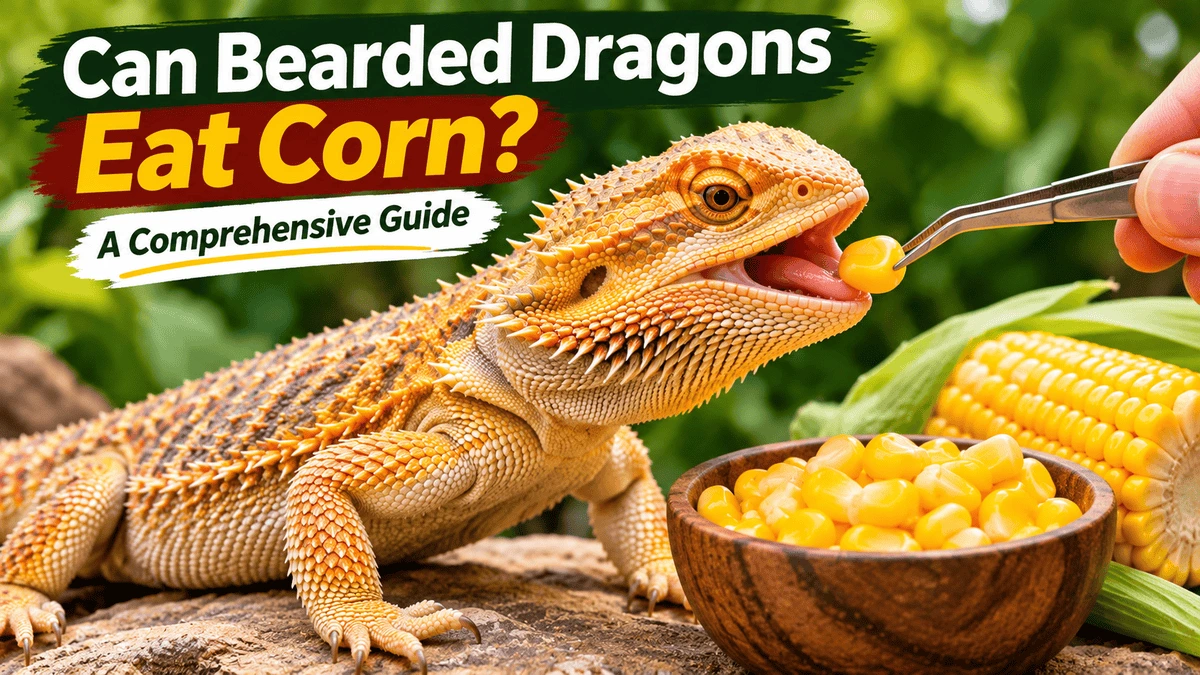
Can bearded dragons eat corn? Yes, bearded dragons can eat small amounts of plain corn occasionally. However, corn is not a staple food for these reptiles. Although it is not toxic, corn provides limited nutritional value compared with calcium-rich leafy greens and other vegetables. Feeding too much corn may contribute to an unbalanced diet. Learn which types of corn are safe, how to prepare them, and which corn products you should avoid.
Can Bearded Dragons Eat Corn?
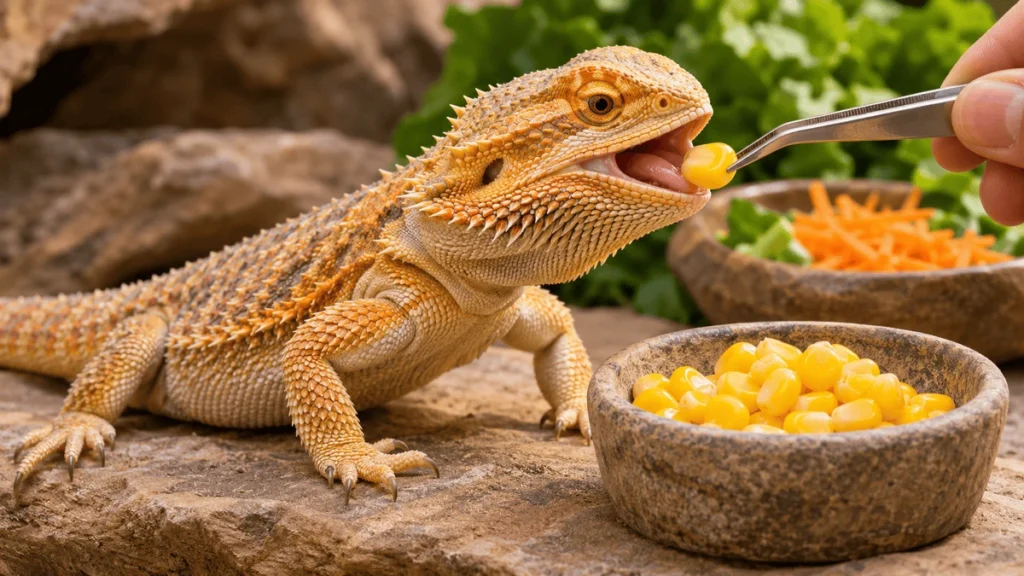
Yes, bearded dragons can eat corn in small quantities as an occasional treat. Plain corn is generally considered safe for healthy bearded dragons when it is prepared properly and offered in moderation.
However, corn should not replace nutritious vegetables, leafy greens, or appropriate feeder insects. It is relatively low in calcium compared with phosphorus, and its nutritional profile makes it less suitable as a regular food.
According to the University of California, Davis School of Veterinary Medicine, corn is among the vegetables that should be fed sparingly because of its relatively low nutritional value. Bearded dragon care guidance from UC Davis recommends prioritizing more nutritious vegetables and leafy greens.
Is Corn Good for Bearded Dragons?
Corn contains carbohydrates, fiber, and some vitamins. However, these nutrients do not make it an ideal staple food for bearded dragons.
Its relatively high phosphorus content compared with calcium is an important consideration. Bearded dragons need an appropriate calcium-to-phosphorus balance to maintain healthy bones and support normal growth.
Instead of relying on corn, offer a variety of calcium-rich greens, vegetables, and properly gut-loaded feeder insects. Corn can be included occasionally for variety, but it should not become a regular part of the diet.
Can Bearded Dragons Eat Corn on the Cob?
Bearded dragons should not be allowed to chew directly on a corn cob. The cob is tough, difficult to digest, and may pose a choking or gastrointestinal obstruction risk if swallowed.
If you decide to offer corn, remove the kernels from the cob first. Prepare the kernels by cooking them without salt, butter, oil, or seasoning, then allow them to cool completely.
Only offer a few small kernels occasionally. Avoid feeding the cob itself, even if your bearded dragon appears interested in chewing it.
Can Bearded Dragons Eat Corn Worms?
The term “corn worms” can refer to different insects, including corn earworms, which are caterpillars of the corn earworm moth. These insects are not the same as standard feeder worms sold for reptiles.
Do not feed wild-collected corn earworms to your bearded dragon. Insects collected from gardens, farms, or cornfields may have been exposed to pesticides, parasites, or other contaminants.
Instead, choose commercially raised feeder insects from a reputable reptile supplier. Suitable options may include crickets, dubia roaches, black soldier fly larvae, and appropriately sized mealworms.
Can Bearded Dragons Eat Corn and Peas?
Yes, bearded dragons can eat small amounts of plain corn and peas. Both foods can be included occasionally as part of a varied vegetable offering.
However, neither corn nor peas should replace calcium-rich leafy greens. A balanced diet should include a variety of vegetables, such as collard greens, mustard greens, dandelion greens, squash, and bell peppers.
Fresh or frozen peas are preferable to canned peas because canned products may contain added salt or other ingredients. If using frozen vegetables, thaw them and serve them plain.
Can Bearded Dragons Eat Cornflakes?
No, cornflakes are not an appropriate food for bearded dragons. These breakfast cereals are processed human foods and may contain added salt, sugar, flavorings, or other ingredients that reptiles do not need.
Even plain cornflakes are not nutritionally balanced for bearded dragons. Their dry, processed texture and limited nutritional value make them a poor choice.
Stick to fresh vegetables, suitable leafy greens, and commercially raised feeder insects to meet your pet’s nutritional needs.
Can Bearded Dragons Eat Baby Corn?
Bearded dragons can eat a small amount of plain baby corn occasionally. Baby corn is harvested before the kernels fully mature, and its tender texture can make it easier to prepare than mature corn.
Wash baby corn thoroughly and cut it into small, manageable pieces. Cook it without added salt, oil, or seasoning if you choose to serve it.
Although baby corn can provide some variety, it should not be considered a primary vegetable. Nutritious leafy greens and other vegetables should remain the foundation of your bearded dragon’s plant-based diet.
Can Bearded Dragons Eat Frozen Corn?
Yes, plain frozen corn can be offered occasionally after it has been properly thawed and prepared.
Frozen corn is convenient, but check the packaging to ensure it contains no added salt, butter, sauces, or seasonings.
For the safest preparation:
- Choose plain frozen corn kernels.
- Thaw the kernels completely.
- Cook them in plain water if desired, without salt or seasoning.
- Allow them to cool to room temperature.
- Cut or mash them if needed to make them easier to eat.
- Offer only a small amount as an occasional treat.
Never feed frozen corn directly from the freezer. Frozen food can be uncomfortable to eat and may be difficult for your reptile to handle.
Can Bearded Dragons Eat Canned Corn?
Canned corn is best avoided. Many canned products contain added salt, preservatives, or other ingredients that are unnecessary for bearded dragons.
Even canned corn labeled as having no added salt offers limited nutritional benefits compared with more suitable vegetables.
Fresh or plain frozen corn is a better option if you want to offer corn occasionally. Always check the ingredients and avoid products containing butter, sauces, or seasoning.
Can Bearded Dragons Eat Sweetcorn?
Yes, bearded dragons can eat a small amount of plain sweetcorn occasionally. Sweetcorn is a variety of corn that contains more natural sugars than some other corn varieties.
Although sweetcorn is not toxic, its carbohydrate content and relatively poor calcium-to-phosphorus balance mean it should not be a regular part of your bearded dragon’s diet.
Offer a few small kernels occasionally rather than a large serving. Sweetcorn should be treated as an occasional food, not a substitute for leafy greens or other nutritious vegetables.
Can Bearded Dragons Eat Raw Corn?
Raw corn is not generally considered toxic to bearded dragons. However, cooked plain corn may be easier to chew and prepare for feeding.
Raw kernels can be relatively firm, especially for smaller or younger dragons. If you choose to offer raw corn, ensure it is fresh, thoroughly washed, and cut into small pieces.
Cooking corn is not a requirement for eliminating a known toxin. It is simply a practical preparation choice. In either case, corn should be offered sparingly because it is not a particularly nutritious food for bearded dragons.
Can Bearded Dragons Eat Corn Husks?
No, corn husks are not recommended for bearded dragons. The husks are fibrous and tough, making them difficult to chew and digest.
Large or tough pieces may create a choking hazard or contribute to gastrointestinal problems if swallowed.
Always remove the husks and silk before preparing corn for your bearded dragon. If you offer corn, use only a small quantity of the kernels.
How Much Corn Can a Bearded Dragon Eat?
There is no universally established serving size for corn in bearded dragons. Because corn is a low-nutritional-value food, it is best to offer only a few small kernels occasionally rather than serving it regularly.
A practical approach is to offer a small taste once in a while, while keeping the majority of the vegetable portion focused on nutritious greens and other vegetables.
Bearded dragons have different nutritional requirements depending on their age, growth, health, and activity. Juveniles generally need more appropriately sized feeder insects, while adults require a larger proportion of plant-based foods.
For an individualized feeding plan, consult a veterinarian experienced in reptile medicine.
What Are Better Vegetables for Bearded Dragons?
Instead of feeding corn frequently, focus on vegetables that provide a better nutritional balance.
Some suitable vegetables and greens include:
- Collard greens: A nutritious leafy green that provides calcium.
- Mustard greens: A useful component of a varied vegetable diet.
- Dandelion greens: A nutrient-rich leafy vegetable.
- Butternut squash: A suitable vegetable that can be grated or finely chopped.
- Bell peppers: A colorful vegetable that can add variety.
- Green beans: A suitable vegetable to include in a varied diet.
- Turnip greens: A nutritious leafy green that can be offered regularly.
Wash all produce thoroughly and cut it into appropriately sized pieces. Rotate vegetables to provide variety rather than relying on a single food.
For additional guidance, see the North Carolina State University veterinary guide to caring for bearded dragons.
Frequently Asked Questions
Can bearded dragons eat corn every day?
No. Corn should not be fed every day because it provides limited nutritional value and has an unfavorable calcium-to-phosphorus balance. Offer more nutritious vegetables and leafy greens instead.
Can baby bearded dragons eat corn?
Baby bearded dragons may be able to eat a tiny amount of plain corn, but it is not a useful staple food. Young dragons need a carefully balanced diet with appropriately sized feeder insects and nutritious vegetables to support growth.
Can bearded dragons eat corn kernels?
Yes, plain corn kernels can be offered occasionally. Remove them from the cob, prepare them without seasoning, and serve only a small amount.
Can bearded dragons eat popcorn?
No. Popcorn is not recommended for bearded dragons. It may contain salt, butter, oil, or other additives, and the hard pieces can be difficult to chew. Unpopped kernels also pose a choking risk.
Can bearded dragons eat corn tortillas?
Corn tortillas are not recommended. They are processed human foods and may contain added salt, oil, or other ingredients. They do not provide the balanced nutrition bearded dragons need.
What happens if a bearded dragon eats too much corn?
Eating too much corn may contribute to an unbalanced diet, especially if it replaces nutritious vegetables. If your bearded dragon develops vomiting, persistent appetite loss, abnormal stools, or signs of discomfort, contact a reptile veterinarian.
Can bearded dragons eat corn with butter or salt?
No. Avoid corn prepared with butter, salt, oil, sauces, or seasonings. If you offer corn, use plain kernels only.
Conclusion
Bearded dragons can eat corn in moderation, but it should be considered an occasional treat rather than a regular part of their diet. Plain corn kernels are generally safe when prepared appropriately, while corn cobs, husks, popcorn, and processed corn products should be avoided.
The best diet for a bearded dragon includes a variety of calcium-rich leafy greens, nutritious vegetables, and appropriately sized feeder insects. By prioritizing these foods and offering corn only occasionally, you can help support your pet’s long-term nutritional health.
Disclaimer: This article is for informational purposes only and is not a substitute for professional veterinary advice. Consult a qualified reptile veterinarian if you have concerns about your bearded dragon’s diet or health.