Green cheek conures are popular pets known for their playful and affectionate personalities. As responsible pet owners, it’s important to ensure that our feathered friends are receiving a balanced and nutritious diet. One question that often arises is whether or not green cheek conures can eat grapes.
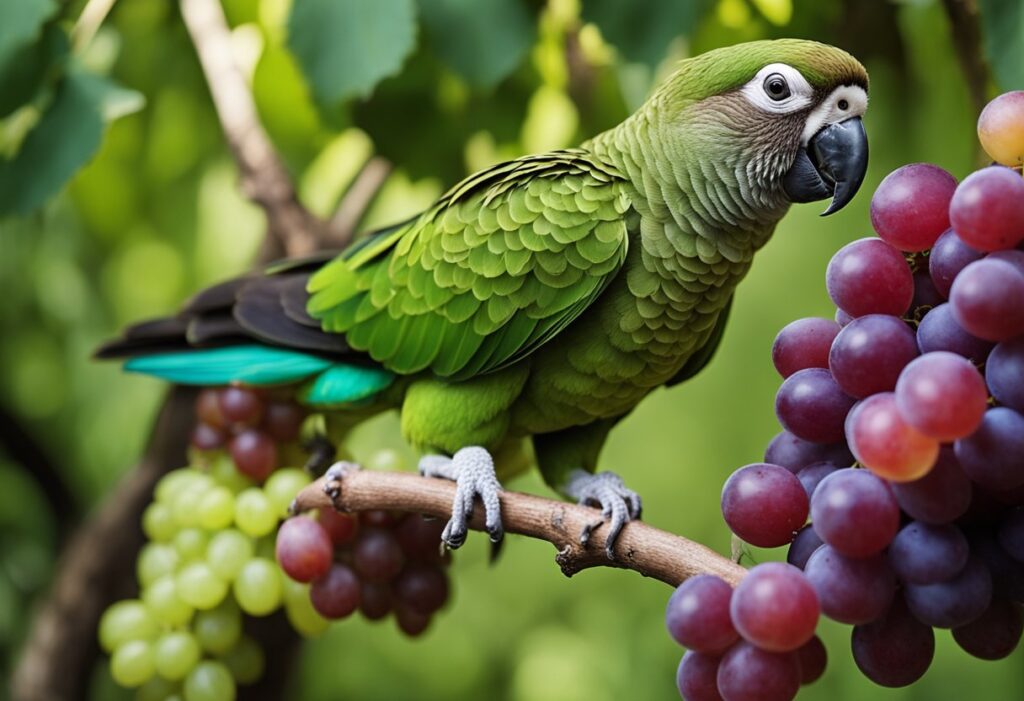
The short answer is yes, green cheek conures can eat grapes. Grapes are a great source of vitamins and minerals, including vitamin C and potassium. However, as with any new food, it’s important to introduce grapes slowly and in moderation to avoid any digestive issues. Additionally, it’s important to remove any seeds or stems before offering grapes to your conure, as these can be harmful to their health.
Overall, grapes can be a healthy and tasty addition to your green cheek conure’s diet. However, as with any dietary changes, it’s important to consult with a veterinarian or avian specialist to ensure that your pet is receiving a well-balanced diet that meets their specific nutritional needs.
Green Cheek Conures Dietary Needs
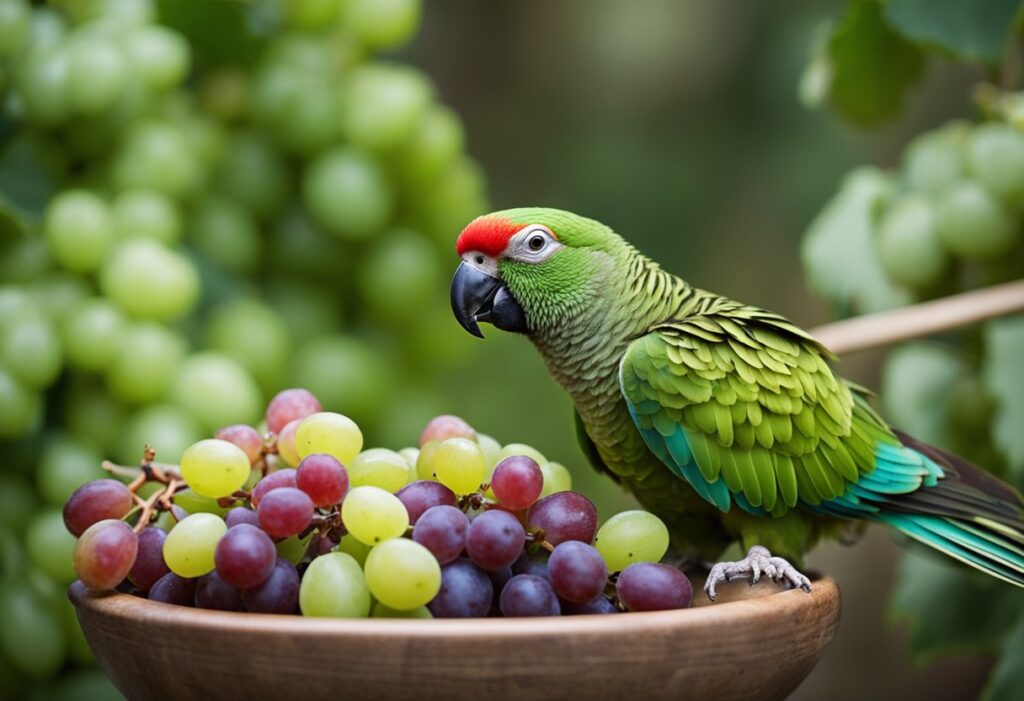
As responsible pet owners, it is crucial to ensure that our feathered friends have a balanced and nutritious diet. Green Cheek Conures are no exception and require a variety of foods to maintain optimal health.
In the wild, Green Cheek Conures feed on fruits, seeds, insects, and nuts. In captivity, their diet should consist of a high-quality pellet mix, fresh fruits, and vegetables. It is essential to provide a balanced diet to prevent malnutrition and health issues.
When it comes to fruits, Green Cheek Conures can eat grapes in moderation. Grapes are a good source of vitamins and minerals, including vitamin C, potassium, and fiber. However, grapes are also high in sugar, so it is essential to limit their intake to prevent obesity and other health issues.
It is also important to note that some fruits and vegetables can be toxic to birds. Avocado, for example, should be avoided at all costs as it contains persin, which is toxic to birds. Always research and consult with a veterinarian before introducing new foods to your Green Cheek Conure’s diet.
In conclusion, a balanced and varied diet is crucial for the health and well-being of Green Cheek Conures. Fresh fruits and vegetables, including grapes in moderation, can be a healthy addition to their diet. However, it is essential to research and consult with a veterinarian before introducing new foods to prevent any potential health issues.
Safety of Grapes for Green Cheek Conures
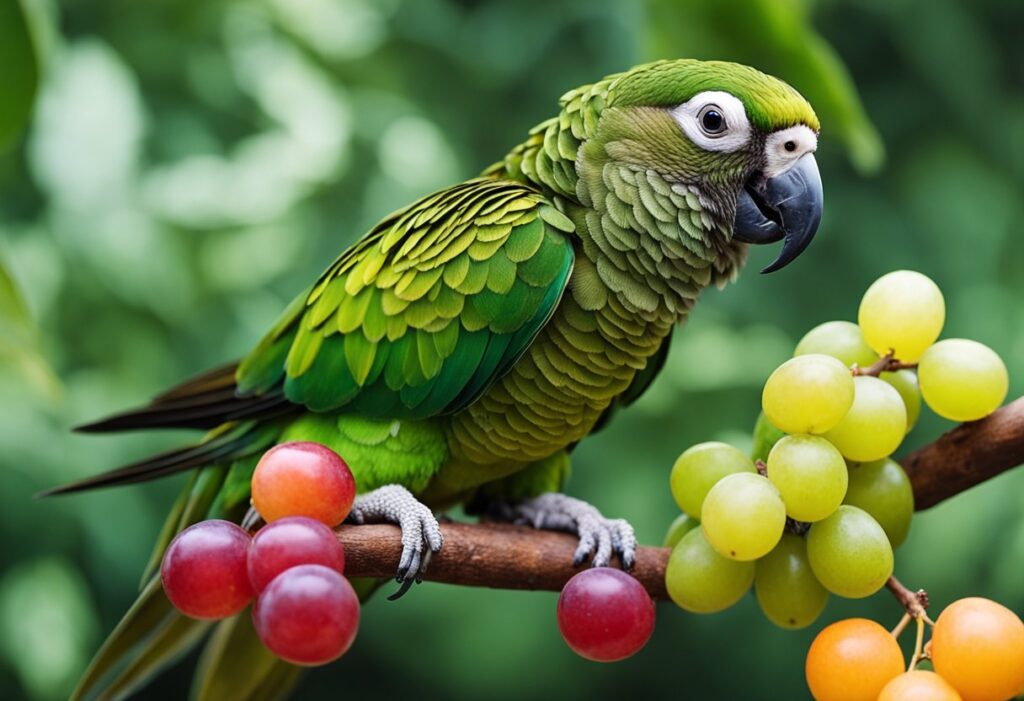
Grapes are a common fruit that many pet owners enjoy sharing with their feathered friends. However, before feeding your green cheek conure grapes, it’s important to understand the potential health risks and benefits associated with this fruit.
Potential Health Risks
While grapes are generally safe for green cheek conures to consume in moderation, there are some potential health risks to consider. One of the main concerns is that grapes contain a high amount of sugar, which can lead to weight gain and other health issues if consumed in excess.
Another risk to be aware of is that grapes may contain pesticides and other harmful chemicals if they are not organically grown. It’s important to thoroughly wash grapes before feeding them to your green cheek conure to minimize the risk of exposure to these toxins.
Lastly, grapes contain seeds that can be a choking hazard for birds. Always remove the seeds before feeding grapes to your green cheek conure to prevent any accidents.
Benefits of Grapes
Despite the potential risks, there are also some benefits to feeding grapes to your green cheek conure. Grapes are a good source of vitamins C and K, as well as antioxidants that can help support your bird’s immune system.
In addition, grapes can be a tasty and healthy treat that can help provide enrichment for your green cheek conure. Just be sure to offer grapes in moderation and as part of a balanced diet that includes a variety of fruits, vegetables, and other nutritious foods.
Overall, while grapes can be a safe and healthy snack for green cheek conures, it’s important to be aware of the potential risks and benefits before feeding them to your feathered friend. By taking the necessary precautions and offering grapes in moderation, you can help ensure that your green cheek conure stays happy and healthy.
Feeding Grapes to Green Cheek Conures
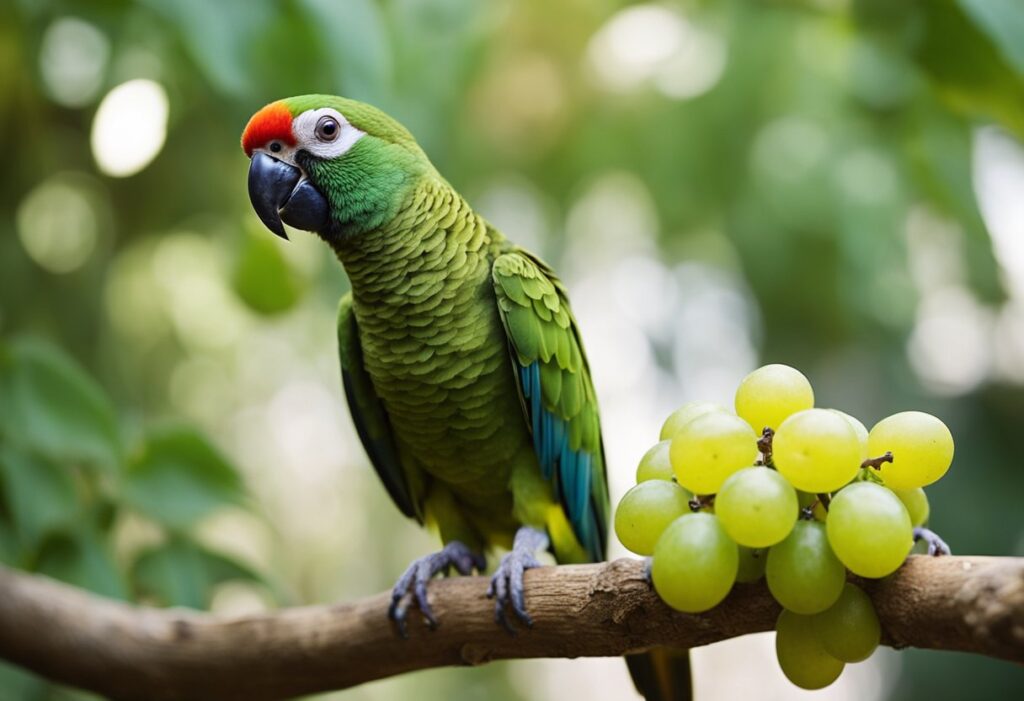
Green Cheek Conures are small parrots that are native to South America. They are known for their playful and social personalities, and they make great pets for bird lovers. As with any pet, it is important to ensure that they are getting the proper nutrition they need to stay healthy and happy. One question that many Green Cheek Conure owners have is whether or not they can feed their birds grapes.
Preparation and Serving Size
Grapes can be a healthy and tasty treat for Green Cheek Conures, but it is important to prepare them properly and serve them in the right amount. Before feeding your bird grapes, make sure to wash them thoroughly to remove any pesticides or other contaminants. It is also important to remove the seeds and cut the grapes into small pieces to prevent choking.
When it comes to serving size, it is recommended to give your Green Cheek Conure no more than one or two small pieces of grape per day. Grapes are high in sugar and can cause digestive issues if given in large amounts. It is also important to remember that grapes should not be the main source of nutrition for your bird, but rather a supplement to their regular diet.
Frequency of Feeding
While grapes can be a healthy treat for Green Cheek Conures, it is important to not overdo it. Feeding your bird grapes too frequently can lead to health problems such as obesity and digestive issues. It is recommended to give your bird grapes no more than once or twice a week as a special treat.
In conclusion, Green Cheek Conures can safely eat grapes as long as they are prepared properly and served in moderation. As with any new food, it is important to introduce grapes slowly and monitor your bird’s reaction. With the right preparation and serving size, grapes can be a healthy and enjoyable addition to your Green Cheek Conure’s diet.
Alternative Fruits for Green Cheek Conures
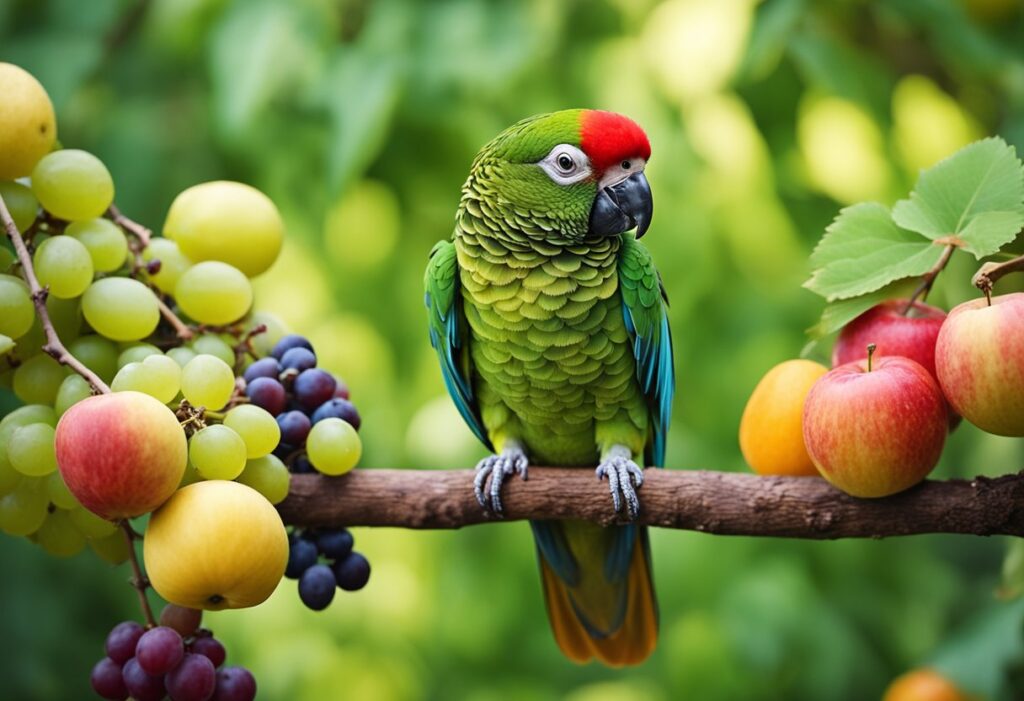
As much as green cheek conures love grapes, it is important to provide them with a variety of fruits to ensure a balanced diet. Here are some alternative fruits that you can offer to your feathered friend:
- Apples: Sliced apples make a great treat for green cheek conures. Just make sure to remove the seeds and core before giving it to them.
- Bananas: Bananas are a great source of potassium and are loved by green cheek conures. You can offer them small pieces of banana as a treat.
- Berries: Blueberries, strawberries, and raspberries are all safe for green cheek conures and are packed with antioxidants.
- Mango: Mango is a favorite among many birds, including green cheek conures. Just make sure to remove the skin and pit before giving it to them.
- Papaya: Papaya is a rich source of vitamins A and C, which are important for the health of green cheek conures. You can offer them small pieces of papaya as a treat.
Remember to always wash fruits thoroughly before giving them to your green cheek conure. Also, keep in mind that fruits should only make up a small portion of their diet and should be given in moderation.
Monitoring Your Conure’s Health
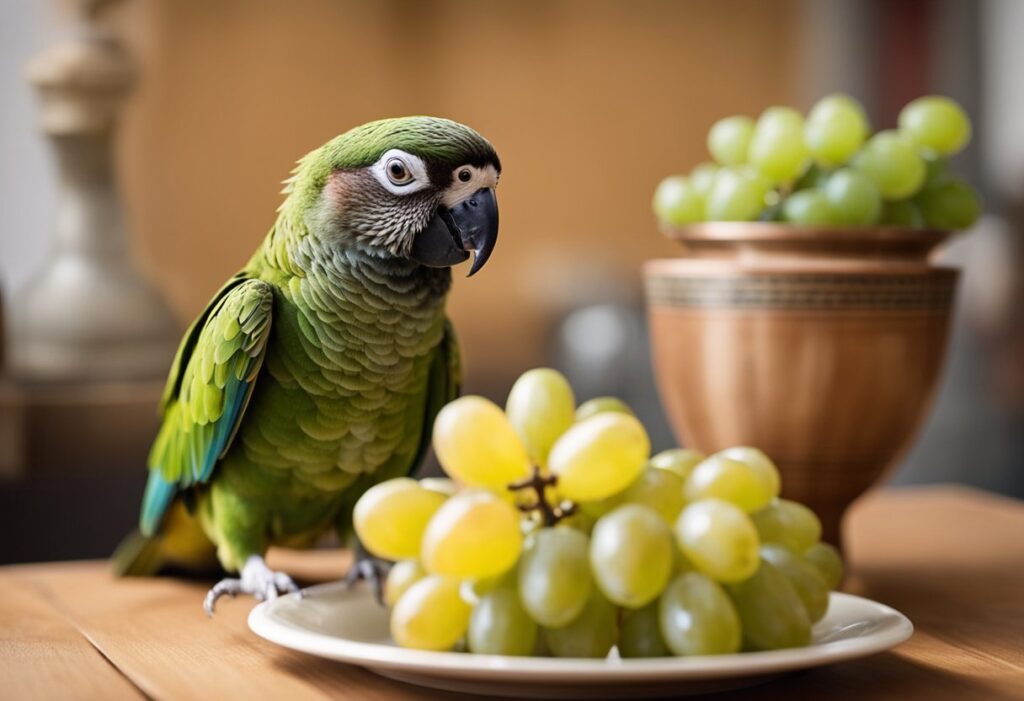
As responsible pet owners, it is crucial to keep a close eye on our green cheek conure’s health. This includes monitoring their diet and ensuring they are consuming a balanced and nutritious diet.
While grapes can be a tasty treat for green cheek conures, it is important to remember that they should only be given in moderation. Grapes are high in sugar and can lead to obesity and other health issues if consumed in excess.
In addition to monitoring their diet, it is important to keep an eye on your conure’s behavior and physical appearance. Signs of illness can include lethargy, loss of appetite, changes in stool or urine, and changes in feather appearance.
Regular check-ups with an avian veterinarian can also help ensure your conure’s health and catch any potential issues early on.
By staying vigilant and taking proactive measures, we can help ensure our green cheek conures live happy and healthy lives.
Frequently Asked Questions
Are seeded grapes safe for green cheek conures to consume?
It is generally recommended to avoid feeding seeded grapes to green cheek conures, as the seeds can be a choking hazard and may cause digestive issues. Seedless grapes are a safer option and can be given in moderation as a treat.
Is it alright for green cheek conures to eat both green and red grapes?
Yes, green cheek conures can consume both green and red grapes. However, it is important to note that grapes should only be given in moderation as they are high in sugar.
Can feeding blueberries to green cheek conures have any adverse effects?
Blueberries are safe for green cheek conures to consume and can be a nutritious addition to their diet. However, like grapes, they should only be given in moderation due to their high sugar content.
What are some fruits that green cheek conures should not eat?
Some fruits that should be avoided when feeding green cheek conures include avocado, which can be toxic to birds, and citrus fruits, which can cause digestive issues. Additionally, fruits with pits or seeds, such as cherries and peaches, should be avoided due to the choking hazard they pose.
What is considered the preferred fruit of green cheek conures?
Green cheek conures have a varied diet and enjoy a variety of fruits, including apples, bananas, and grapes. However, it is important to remember that fruits should only make up a small portion of their overall diet.
What specific foods are toxic or harmful to conures?
In addition to avocado, other foods that should be avoided when feeding green cheek conures include chocolate, caffeine, alcohol, and sugary or salty snacks. It is important to research and consult with a veterinarian before introducing any new foods into a conure’s diet.